Understanding what “faith without works is dead” means can be challenging, especially for those trying to connect belief with daily life.
While many people believe in God and practice their faith regularly, their actions often fail to reflect those beliefs. As a result, an important question arises: if faith does not influence behavior, can it truly be considered genuine?
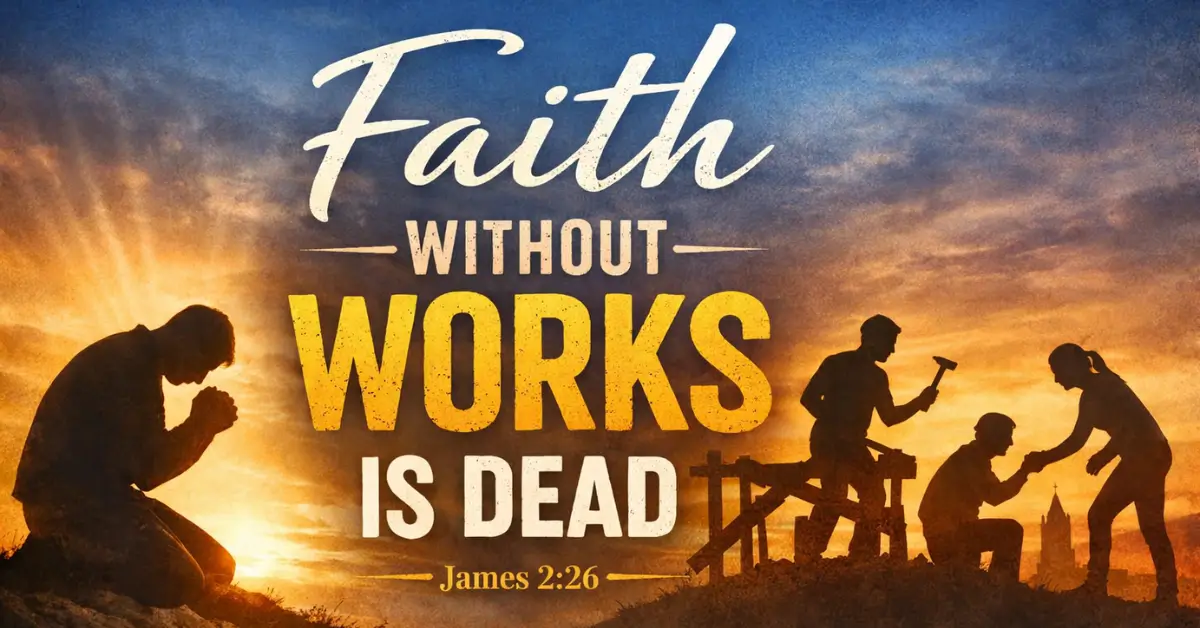
James 2:17 provides a clear response: faith without action is dead.
Rather than suggesting that salvation must be earned, this verse emphasizes that genuine faith produces visible change. When belief is real, it shapes decisions, priorities, and behavior over time.
Key Takeaways
- Genuine faith is demonstrated through consistent action.
- Works do not provide salvation, but they confirm real belief.
- Faith and action function together rather than separately
- Spiritual growth becomes visible through daily choices.
- Small, repeated actions often reveal the strongest faith.
Where Does “Faith Without Works Is Dead” Come From?
Understanding James 2:17 in Context
The phrase originates from James 2:17, where faith without action is described as dead.
To fully understand this concept, it is necessary to define its key terms. Faith refers to trust in God, whereas works describe the actions that naturally follow belief. When James uses the word “dead,” he is describing a faith that produces no visible results.
In this sense, belief without action lacks both depth and effectiveness.
Who Wrote the Book of James?
The book of James was written by James, the brother of Jesus, who addressed early Christians living in different regions.
Although many of these believers claimed to have faith, their actions did not consistently reflect it. They listened to God’s word, yet they failed to apply it in their daily lives. Because of this disconnect, James urged them to live out their beliefs rather than simply talk about them.
His message was direct, practical, and difficult to ignore.
What Does “Faith Without Works Is Dead” Mean?
Faith Is More Than Words
Faith cannot be reduced to spoken belief or emotional agreement; instead, it influences how a person thinks, chooses, and behaves.
For instance, someone may claim to care about others, yet fail to act when help is needed. In such cases, their words lose credibility. Similarly, faith that does not lead to action becomes ineffective.
True faith produces change because it reflects what a person genuinely believes.
Works Show That Faith Is Real
Works should not be viewed as a way to earn salvation. Instead, they function as evidence of what is already happening within a person.
A common illustration is that of a tree. While a healthy tree produces fruit, a dead tree produces nothing. In the same way, actions reveal whether faith is alive.
This explains why “faith without works is dead” continues to hold strong meaning.
Faith vs Works: Are They Opposed?
Are We Saved by Faith Alone?
This topic often leads to confusion because it involves two closely related ideas.
The Bible teaches that salvation comes through faith rather than human effort. However, this does not remove the importance of action. Works do not save a person, but they demonstrate that faith is genuine.
How Faith and Works Work Together
Faith and works are closely connected, and one naturally leads to the other.
When a person places their faith in God, internal change begins. Over time, that change becomes visible through actions, decisions, and behavior. In this way, faith comes first, while works confirm it.
Rather than opposing each other, they function as parts of the same process.
Real-Life Examples of Faith in Action
Helping Someone in Need
When a person chooses to help someone who is struggling, they demonstrate compassion that reflects genuine faith. This action may take different forms, but the intention remains the same.
Doing the Right Thing When It Is Difficult
There are moments when making the right choice is challenging. Choosing honesty over convenience shows that faith influences behavior, even under pressure.
Standing Up for What Is Right
Faith also becomes visible when a person stands for what is right despite opposition. These situations require courage and often reveal the strength of one’s belief.
Why “Faith Without Works Is Dead” Still Matters Today
The Gap Between Belief and Behavior
In many cases, people claim to believe in God, yet their actions do not reflect those beliefs. This creates a gap between what is said and what is done.
Because of this, the message of James remains relevant. Faith must extend beyond words and become part of daily life.
Living Your Faith Daily
Living out faith does not require dramatic or public actions. Instead, it is often expressed through small, consistent decisions made over time.
- Choosing honesty in difficult situations
- Treating others with respect
- Offering help when needed
- Practicing patience and forgiveness
These actions demonstrate that faith is active and growing.
Common Misunderstandings
Do Good Works Save You?
Good works do not provide salvation.
Salvation comes through faith, but genuine faith produces action. When actions are completely absent, it raises questions about whether that faith is real.
What If My Faith Is Weak?
It is common for faith to feel weak at times.
However, faith grows through consistent practice. By praying regularly, reading Scripture, and taking small steps of obedience, a person can strengthen their faith over time.
How to Apply This in Your Life
Start Small
Significant change does not happen all at once. Instead, it begins with small actions that reflect personal belief.
- Help someone who needs support.
- Speak honestly in every situation.
- Show kindness even when it is difficult.
These simple steps create long-term growth.
Build Consistent Habits
Consistency plays a key role in developing strong faith.
Daily habits such as prayer, reading Scripture, and self-reflection help reinforce belief. Over time, these habits shape both character and behavior.
FAQ Section
What does “faith without works is dead” mean in simple terms?
It means that faith is not genuine if it does not lead to action.
Where is this verse found in the Bible?
It is found in James 2:17.
Can faith exist without works?
A person may claim to have faith, but without action, it remains incomplete.
Are works required for salvation?
No, salvation comes through faith, while works serve as evidence of that faith.
What are examples of faith in action?
Helping others, making honest decisions, and standing for what is right.
Why did James teach this message?
He wanted believers to demonstrate their faith through action rather than words.
Conclusion
In the end, the phrase “faith without works is dead” emphasizes that genuine belief is demonstrated through actions.
Faith becomes meaningful when it influences how a person lives. Although perfection is not required, consistent action is necessary to demonstrate genuine belief.
👉 What action will you take today to live out your faith?